

When it comes to sealing solutions that uphold superior performance and reliability, look no further than Junty’s carbon graphite seals. Carbon graphite, renowned for its versatility and exceptional properties, serves as a soft material in a wide array of applications. From wet running to dry running, these seals offer outstanding thermal shock resistance, good thermal conductivity, excellent natural lubricity, and good corrosion resistance. At Junty, we understand the significance of carbon graphite seals in diverse industries, so we have developed different grades of mechanical carbon to meet various service conditions.
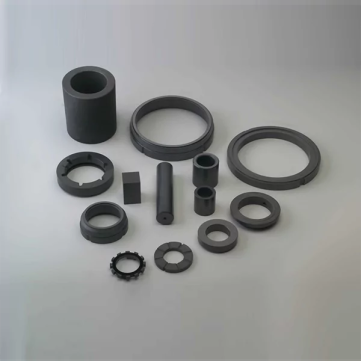
The Advantages of Carbon Graphite Seals
Carbon graphite seals have emerged as the preferred choice for businesses seeking maximum efficiency and longevity in their mechanical systems. These seals are designed to prevent leakage and contamination while ensuring effective sealing in dynamic environments. With the ability to withstand extreme temperatures and pressures, carbon graphite seals guarantee optimal machinery performance, minimizing downtime and enhancing productivity.
Unveiling Remarkable Properties for Enhanced Performance
The popularity of carbon graphite seals stems from their exceptional properties, which contribute to heightened efficiency across industries. With remarkable thermal shock resistance, these seals remain intact even in the face of rapid temperature fluctuations. Furthermore, their good thermal conductivity allows for efficient dissipation of heat, preventing overheating and potential damage to machinery. The outstanding natural lubricity of carbon graphite seals reduces friction and minimizes wear and tear, thus extending the lifespan of components. Combined with good corrosion resistance, these seals prove to be reliable even in chemically aggressive environments, ensuring long-lasting performance under challenging conditions.
Tailored Solutions for Varied Service Conditions
Different mechanical carbon grades have been developed to accommodate diverse service conditions. At Junty, we offer a comprehensive range of carbon graphite seals, each tailored to address specific industry requirements. Whether your operations fall within the oil and gas, aerospace, or automotive sectors, our seals can be customized to withstand the unique challenges presented by your applications.
Unparalleled Performance and Reliability
By choosing Junty’s carbon graphite seals, businesses can access unrivaled performance and reliability. Our seals undergo rigorous testing and quality control measures to ensure they meet the highest standards of durability and efficiency. Committed to technological innovation, we continually push the boundaries of what carbon graphite seals can achieve, providing customers with cutting-edge solutions that surpass expectations.
Conclusion:
In today’s fast-paced and demanding industrial landscape, businesses need sealing solutions they can depend on. Junty’s carbon graphite seals offer the peroper combination of versatility, performance, and reliability. With exceptional properties and the capacity to cater to diverse service conditions, these seals empower businesses to overcome challenges effortlessly. Choose Junty for carbon graphite seals that exceed expectations and propel your business toward unparalleled success.
Share This Post With Others!
Related Posts
 Enhance Water Pump Performance with Versatile Mechanical Seal Rings from JuntyAugust 30, 2024
 Trust Junty for All of Your Thrust Disc and Thrust Washer NeedsAugust 29, 2024
 Your Trusted Source for High-Quality Mechanical Seal PartsAugust 28, 2024
 Carbon Graphite Solutions Boasting Resin Bonding, Resin Impregnating, and Metal ImpregnatingAugust 27, 2024