

At Junty, we specialize in providing high-quality tungsten carbide seal solutions for various industrial applications. In this article, we will explore the six different types of tungsten carbide available, both nickel- and cobalt-bonded varieties. By understanding the unique properties and benefits of each type, you can make an informed decision when selecting the most suitable tungsten carbide seal for your specific business needs.
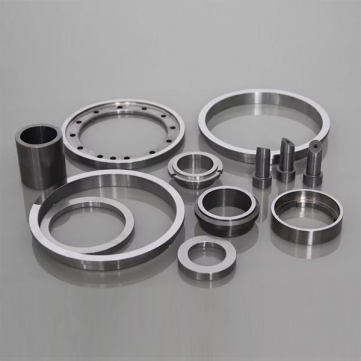
6% Nickel Bonded Tungsten Carbide
Exceptional Wear Resistance: The 6% nickel bonded tungsten carbide exhibits remarkable hardness, making it ideal for applications where wear resistance is crucial.
Enhanced Corrosion Protection: This grade offers superior corrosion protection, extending the lifespan of your tools and components.
6% Cobalt Bonded Tungsten Carbide
Unparalleled Hardness: The 6% cobalt bonded tungsten carbide offers even higher hardness than its nickel-bonded counterpart, ensuring exceptional performance under extreme conditions.
Superior Abrasion Resistance: With its excellent abrasion resistance properties, this grade is perfect for applications involving high levels of wear and tear.
8% Nickel Bonded Tungsten Carbide
Enhanced Mechanical Properties: The 8% nickel bonded tungsten carbide combines excellent wear resistance with improved mechanical strength, making it suitable for demanding industrial applications.
Reliable Corrosion Resistance: This grade provides reliable protection against corrosive environments, ensuring longevity and durability.
8% Cobalt Bonded Tungsten Carbide
Superior Impact Resistance: The 8% cobalt bonded tungsten carbide excels in applications where impact resistance is crucial, offering exceptional performance in high-stress environments.
High Temperature Stability: This grade maintains its integrity and performance even in elevated temperature conditions.
10% Nickel Bonded Tungsten Carbide
Extreme Hardness: The 10% nickel bonded tungsten carbide exhibits outstanding hardness, making it an excellent choice for applications requiring exceptional wear resistance and cutting performance.
Resilient Corrosion Protection: This grade provides optimal corrosion resistance, ensuring the longevity and reliability of your tools and components.
10% Cobalt Bonded Tungsten Carbide
Unmatched Strength: The 10% cobalt bonded tungsten carbide offers remarkable strength, making it suitable for heavy-duty applications where toughness and durability are paramount.
Enhanced Heat Resistance: This grade can withstand high temperatures while maintaining its integrity and performance.
Conclusion
When selecting tungsten carbide seal for your applications, it is crucial to consider the specific properties and benefits of each type. Junty provides a comprehensive range of tungsten carbide seal solutions, including nickel- and cobalt-bonded varieties, to cater to diverse industrial needs. Whether you require exceptional wear resistance, corrosion protection, or impact resistance, there is a tungsten carbide seal grade at Junty that meets your requirements. Trust Junty to deliver superior quality and performance for your business needs.
Share This Post With Others!
Related Posts
 Enhance Water Pump Performance with Versatile Mechanical Seal Rings from JuntyAugust 30, 2024
 Trust Junty for All of Your Thrust Disc and Thrust Washer NeedsAugust 29, 2024
 Your Trusted Source for High-Quality Mechanical Seal PartsAugust 28, 2024
 Carbon Graphite Solutions Boasting Resin Bonding, Resin Impregnating, and Metal ImpregnatingAugust 27, 2024