

Junty stands out as a symbol of innovation and dependability in the ever-changing world of industrial seals. Featuring the exceptional qualities of cobalt-bonded tungsten carbide (TC), this article reveals Junty’s dedication to tungsten carbide seal excellence. Our exploration of high-performance seals reveals Junty’s commitment to raising trade benchmarks.
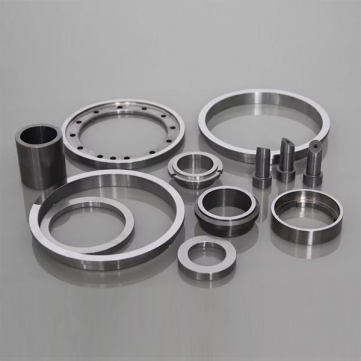
Comparing Nickel and Cobalt-Bonded TC
Distinctive Properties of Tungsten Carbide:
Explore the distinct properties of nickel- and cobalt-bonded tungsten carbide embedded in Junty’s seals. While both varieties showcase remarkable corrosion protection, delve into the nuanced differences that set them apart in terms of hardness and abrasion resistance.
Superior Hardness and Abrasion Resistance:
Highlight the unparalleled hardness and abrasion resistance offered by cobalt-bonded TC. Illustrate how Junty’s seals, crafted with this superior material, outshine in demanding industrial environments compared to nickel-bonded TC, ensuring prolonged performance and durability.
Optimizing Performance with Cobalt-Bonded TC Grades
Introduction to Cobalt-Bonded TC Grades:
Introduce the spectrum of cobalt-bonded tungsten carbide grades available at Junty – 6%, 8%, and 10% Cobalt bonded TC. Each grade reflects Junty’s precision in catering to diverse industrial needs.
Showcasing Superior Performance:
Showcase the exceptional performance characteristics of cobalt-bonded TC grades. Illustrate how these grades optimize performance in specific applications, emphasizing Junty’s dedication to delivering high-quality tungsten carbide seals tailored to industry requirements.
Junty’s Commitment to Excellence
The Junty Advantage – Unmatched Quality:
Reiterate the commitment of Junty to provide unmatched quality in tungsten carbide seals. Emphasize how Junty’s seals, particularly those crafted with cobalt-bonded TC, stand as a testament to precision engineering and excellence in the field.
Tailored Solutions for Diverse Applications:
Junty’s pledge to offer tailored solutions is exemplified through our recognition of the suitability of cobalt-bonded Tungsten Carbide (TC) for specific applications. We understand that different industries and operating conditions require specialized solutions, and our commitment extends beyond providing mechanical seals. Junty is dedicated to engineering comprehensive solutions that redefine performance standards across various industries. By leveraging the exceptional properties of cobalt-bonded TC, such as high hardness, wear resistance, and thermal stability, we deliver customized solutions that excel in demanding environments. Our team of experts works closely with customers to understand their unique requirements and challenges, ensuring that the engineered solutions we provide meet and exceed their expectations.
Conclusion
As we conclude this exploration into cobalt-bonded tungsten carbide seals, Junty stands at the forefront of technological innovation. The superior hardness, abrasion resistance, and corrosion protection offered by cobalt-bonded TC grades underscore Junty’s commitment to pushing the boundaries of industrial excellence. Contact Junty today to experience the transformative impact of tungsten carbide seals crafted with precision and dedication to unmatched quality.
Share This Post With Others!
Related Posts
 Enhance Water Pump Performance with Versatile Mechanical Seal Rings from JuntyAugust 30, 2024
 Trust Junty for All of Your Thrust Disc and Thrust Washer NeedsAugust 29, 2024
 Your Trusted Source for High-Quality Mechanical Seal PartsAugust 28, 2024
 Carbon Graphite Solutions Boasting Resin Bonding, Resin Impregnating, and Metal ImpregnatingAugust 27, 2024