

When it comes to optimizing industrial efficiency and reliability, Junty is the brand you can trust. With our breakthrough sic mechanical seal, businesses gain access to an unrivaled solution that brings superior performance and durability. For more than 25 years, silicon carbide (SiC) has reigned as one of the most sought-after high-performance tribomaterials in the market. In this article, we will explore the advantages of Junty’s sic mechanical seal, highlighting its exceptional thermal expansion, high thermal conductivity, and unmatched hardness compared to tungsten carbide. Join us as we discover how this remarkable technology can revolutionize your operations.
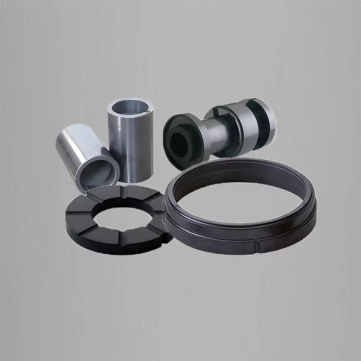
Unmatched Thermal Expansion
Junty’s sic mechanical seal outshines conventional alternatives with its exceptional thermal expansion properties. This unique attribute ensures the seal’s stability and reliability even under extreme temperature fluctuations. Extreme temperature fluctuations can cause conventional seals to expand or contract, leading to leakage issues. Junty’s mechanical seal, with its superior thermal expansion properties, minimizes the risk of leaks by adapting to temperature changes more effectively. This enhances the overall integrity and functionality of the seal. By opting for our seal, businesses can eliminate concerns over thermal stress-induced failures, leading to improved operational efficiency and reduced maintenance costs in the long run. What’s more, by maintaining stability and reliability, Junty’s mechanical seal enables smoother operation and maximizes productivity in various industrial processes.
Superior Thermal Conductivity
Our sic mechanical seal boasts outstanding thermal conductivity, enabling efficient heat dissipation across the sealing interface. This ability to transfer heat effectively prevents localized overheating, preserving the integrity of surrounding components and prolonging the equipment’s lifespan. By choosing Junty’s seal, businesses can achieve optimized performance and reduced downtime due to heat-related issues.
Unrivaled Hardness
Junty’s sic mechanical seal sets itself apart with its unparalleled hardness, surpassing that of tungsten carbide. This exceptional hardness ensures excellent resistance against wear, abrasion, and deformation, even when exposed to demanding operating conditions. By implementing our seal, businesses can confidently tackle challenging applications while enjoying prolonged service life and reduced maintenance costs.
Conclusion
In the competitive landscape of modern industries, selecting the right sealing solution is paramount to achieving peak performance and reliability. Junty’s sic mechanical seal offers unparalleled advantages, including exceptional thermal expansion, high thermal conductivity, and unmatched hardness relative to tungsten carbide. With our cutting-edge technology, businesses can elevate their operations to new heights of efficiency and cost-effectiveness. Whether you operate in oil and gas production, chemical processing, or any other demanding sector, Junty’s sic mechanical seal will be your ultimate partner in success.
Share This Post With Others!
Related Posts
 Enhance Water Pump Performance with Versatile Mechanical Seal Rings from JuntyAugust 30, 2024
 Trust Junty for All of Your Thrust Disc and Thrust Washer NeedsAugust 29, 2024
 Your Trusted Source for High-Quality Mechanical Seal PartsAugust 28, 2024
 Carbon Graphite Solutions Boasting Resin Bonding, Resin Impregnating, and Metal ImpregnatingAugust 27, 2024