

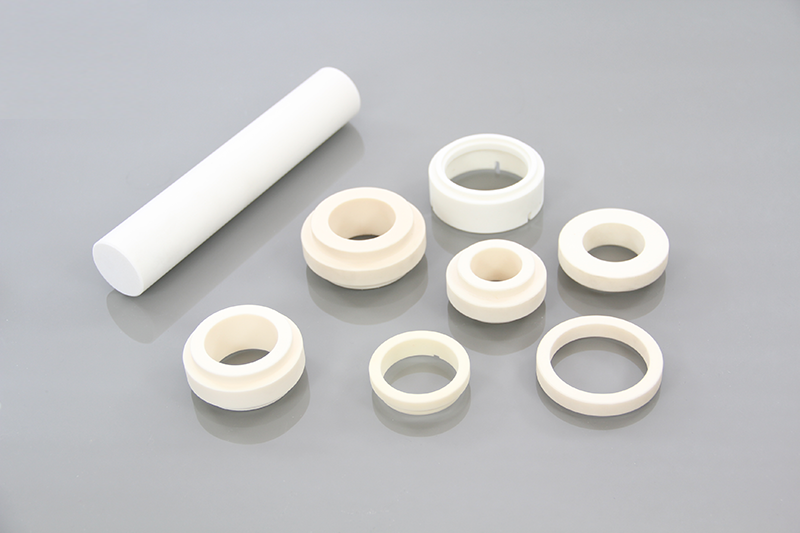
When it comes to mechanical sealing solutions, one material stands out for its exceptional properties and performance: aluminum oxide ceramic. With its unique characteristics, this cutting-edge material offers a range of benefits that can optimize mechanical seals in various applications. Junty is an excellent seal manufacturer.
Harnessing Good Hardness, Wear Resistance, and Stability
Aluminum oxide ceramic possesses excellent hardness, making it highly resistant to wear and abrasion. It can withstand the harshest operating conditions, ensuring durability and longevity for mechanical seal parts. This exceptional wear resistance translates into reduced maintenance costs and increased productivity for our customers.
In addition, aluminum oxide ceramic exhibits remarkable stability, maintaining its structural integrity even under extreme temperatures and pressures. This stability ensures consistent sealing performance and prevents leakages, enhancing the reliability of mechanical seals.
Leveraging High Strength and Stiffness for Improved Performance
One of the key advantages of aluminum oxide ceramic is its high strength and stiffness. Its exceptional mechanical properties allow it to withstand significant loads and stresses, enabling reliable sealing mechanisms in demanding applications. By using aluminum oxide ceramic mechanical seal parts, our products provide superior performance and extend service life, enhancing our customers’ overall efficiency and productivity.
Exploring Chemical Inertness for Application Compatibility
Chemical compatibility is crucial in mechanical sealing applications where exposure to corrosive substances is common. Aluminum oxide ceramic exhibits excellent chemical inertness, effectively resisting the harmful effects of aggressive chemicals and acids. This property ensures that our mechanical seal parts maintain their integrity and sealing effectiveness over time, providing optimal performance in a wide range of industrial environments.
Evaluating Flexural Strength and Elastic Modulus for Performance Assessment
Flexural strength and elastic modulus are essential factors in assessing the performance of mechanical seals. Junty’s aluminum oxide ceramic exhibits exceptional flexural strength and elastic modulus, ensuring reliable load-bearing capabilities and structural stability. This enables our products to withstand bending and deformation under working conditions, guaranteeing consistent sealing performance.
Analyzing Thermal Conductivity and Coefficient of Thermal Expansion for Heat Management
Efficient heat management is crucial for mechanical seal applications involving high temperatures. By analyzing thermal conductivity and the coefficient of thermal expansion, Junty’s aluminum oxide ceramic proves to be an excellent choice. It demonstrates remarkable thermal conductivity to dissipate heat effectively, while its low coefficient of thermal expansion minimizes the risk of thermal stress and cracking.
Conclusion
In conclusion, aluminum oxide ceramic offers remarkable properties that optimize mechanical sealing solutions. As your reliable source for aluminum oxide ceramic mechanical seal parts, Junty provides exceptional quality, tailored purity options, and stylish design appeal. Our products exhibit critical parameters and features necessary for performance excellence. Trust in Junty to unleash the power of aluminum oxide ceramic and enhance the efficiency and reliability of your mechanical seals.
Share This Post With Others!
Related Posts
 Enhance Water Pump Performance with Versatile Mechanical Seal Rings from JuntyAugust 30, 2024
 Trust Junty for All of Your Thrust Disc and Thrust Washer NeedsAugust 29, 2024
 Your Trusted Source for High-Quality Mechanical Seal PartsAugust 28, 2024
 Carbon Graphite Solutions Boasting Resin Bonding, Resin Impregnating, and Metal ImpregnatingAugust 27, 2024