

Junty is at the forefront of innovation in industrial performance, leading the charge with our silicon carbide material. Discover the remarkable properties of silicon carbide and how it stands out among tribomaterials. Learn about Junty‘s efforts to improve industrial performance by using graphite-loaded silicon carbide.
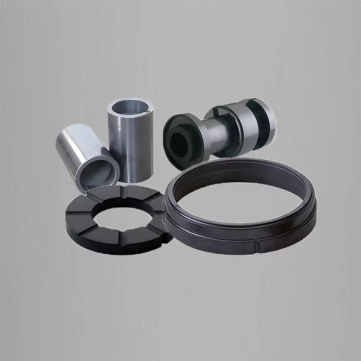
Silicon Carbide’s Unmatched Qualities: Engineering Excellence
A Marvel of Tribomaterials
Silicon carbide material emerges as a marvel, showcasing unparalleled properties that redefine the standards of tribomaterials. With excellent corrosion resistance, abrasion and wear resistance, low coefficients of friction and thermal expansion, high thermal conductivity, and superior hardness compared to tungsten carbide, silicon carbide becomes the epitome of engineering excellence. As Junty, we recognize the transformative power of this material in meeting the demands of industries that require top-tier performance.
Graphite-Loaded Silicon Carbide: Elevating Tribological Performance
Synergy of Materials
Junty takes a leap in innovation with the adoption of graphite-loaded silicon carbide, a composite material that blends the robustness of silicon carbide with the lubricating properties of free graphite. This synergistic combination elevates tribological performance and lubricity in materials like Reaction Bonded Silicon Carbide (RB SiC + C) or Sintered Silicon Carbide (SSiC + C). Junty’s strategic embrace of this composite material underscores our commitment to pushing the boundaries of industrial performance, setting a new standard for reliability and longevity.
Junty: Leading the Silicon Carbide Material Revolution
Junty’s Vision: Redefining Industrial Excellence
As Junty, our vision stretches beyond conventional standards, as we strive to redefine industrial excellence through the utilization of Silicon Carbide Material. By emphasizing the unparalleled qualities of silicon carbide and embracing innovative composites like graphite-loaded silicon carbide, Junty establishes itself as a frontrunner in engineering solutions that consistently surpass industry expectations. Silicon carbide’s exceptional properties, including high hardness, excellent thermal conductivity, and superior chemical resistance, make it an ideal choice for demanding applications. Junty leverages these qualities to deliver cutting-edge solutions that enhance performance, durability, and efficiency. With our commitment to innovation and the application of advanced materials, Junty sets a new standard for excellence in industrial engineering.
Commitment to Progress: Adopting Innovations for Tomorrow
Junty’s commitment to progress is evident in our proactive adoption of graphite-loaded silicon carbide. By continually embracing innovations and leveraging materials that enhance tribological performance, we pave the way for industrial solutions that stand the test of time. Our dedication to adopting cutting-edge technologies reflects Junty’s unwavering commitment to shaping a future where industrial performance knows no bounds.
Conclusion
In summary, Junty’s silicon carbide material, coupled with innovative composites, signifies a paradigm shift in industrial performance. With a focus on engineering excellence and a commitment to progress, Junty emerges as a trailblazer, propelling industries towards a future defined by reliability, longevity, and unmatched performance. Choose Junty for materials that change your industrial landscape.
Share This Post With Others!
Related Posts
 Enhance Water Pump Performance with Versatile Mechanical Seal Rings from JuntyAugust 30, 2024
 Trust Junty for All of Your Thrust Disc and Thrust Washer NeedsAugust 29, 2024
 Your Trusted Source for High-Quality Mechanical Seal PartsAugust 28, 2024
 Carbon Graphite Solutions Boasting Resin Bonding, Resin Impregnating, and Metal ImpregnatingAugust 27, 2024