

Silicon carbide (SiC) has emerged as one of the most sought-after materials in the field of mechanical seals. For over 25 years, Junty has been at the forefront of providing high-performance tribomaterials, and our silicon carbide mechanical seals have garnered immense popularity. With exceptional corrosion resistance, abrasion and wear resistance, low coefficients of friction and thermal expansion, high thermal conductivity, and greater hardness than tungsten carbide, silicon carbide is the material of choice for superior mechanical seal performance.
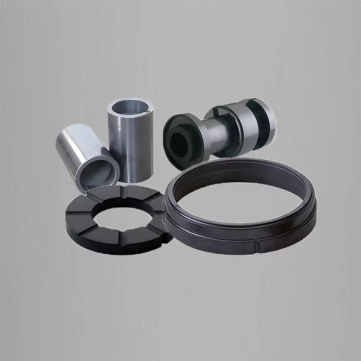
The Power of Silicon Carbide Mechanical Seals
Silicon carbide mechanical seals have improved the world of sealing technology. They provide unparalleled performance, especially in demanding applications. Whether it’s corrosive environments, high temperatures, or abrasive media, silicon carbide mechanical seals offer exceptional resistance, ensuring stability and reliability throughout operations.
Excellent Corrosion and Abrasion Resistance
One of the standout qualities of silicon carbide is its outstanding corrosion resistance. It can withstand harsh chemicals and corrosive fluids, making it an ideal choice for industries where chemical compatibility is of utmost importance. Additionally, silicon carbide mechanical seals exhibit excellent abrasion and wear resistance, ensuring prolonged durability and reduced maintenance requirements.
Low Coefficients of Friction and Thermal Expansion
Efficiency is a crucial factor in mechanical seal applications, and silicon carbide excels in this area. The low coefficients of friction exhibited by silicon carbide mechanical seals minimize energy loss and improve overall system efficiency. Additionally, the low thermal expansion properties of silicon carbide ensure stable sealing performance even under extreme temperature variations, reducing the risk of leakage and downtime.
Impressive Thermal Conductivity and Hardness
The thermal conductivity of silicon carbide is outstanding, which enables it to effectively dissipate heat into the surrounding environment. Having this quality is especially beneficial in high-temperature environments, where it is essential to keep the operating conditions at their ideal level. Furthermore, silicon carbide is more hard than tungsten carbide, which ensures that it is more resistant to wear and has a longer lifespan.
Conclusion:
Junty takes pride in providing high-performance silicon carbide mechanical seals that enhance efficiency and reliability in a wide range of applications. With its exceptional corrosion and abrasion resistance, low coefficients of friction and thermal expansion, high thermal conductivity, and greater hardness than tungsten carbide, silicon carbide is the material of choice for optimal mechanical seal performance. Trust Junty for your mechanical sealing needs, and experience the benefits of our high-quality silicon carbide mechanical seals in enhancing efficiency and minimizing maintenance requirements.
Share This Post With Others!
Related Posts
 Enhance Water Pump Performance with Versatile Mechanical Seal Rings from JuntyAugust 30, 2024
 Trust Junty for All of Your Thrust Disc and Thrust Washer NeedsAugust 29, 2024
 Your Trusted Source for High-Quality Mechanical Seal PartsAugust 28, 2024
 Carbon Graphite Solutions Boasting Resin Bonding, Resin Impregnating, and Metal ImpregnatingAugust 27, 2024