

At Junty, we understand the critical role that mechanical pump seals play in ensuring the smooth operation of high-speed applications. Our dry running gas seals offer non-contacting, dry-running face sealing technology that is widely used in various industries, including natural gas transfer and distribution networks. With a focus on innovation and reliability, Junty provides advanced solutions to enhance efficiency and performance.
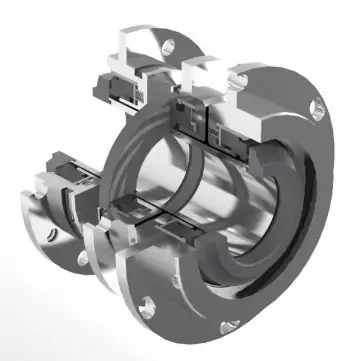
Structure Design of Dry Running Gas Seals
The design of our dry running gas seals follows a balanced mechanical seal structure. However, what sets them apart is the specific seal ring/face design. These seals feature carefully crafted grooves on the seal face, ranging from several microns to ten microns in depth, along with a wider face width. This design allows the dry running gas seal to generate a stable gas film on both sealing surfaces. The gas film possesses strong stiffness, completely separating the two seal faces while maintaining a controlled seal gap, typically a few microns. This optimal sealing gap ensures the prevention of excessive leakage, while also effectively managing the heat generated by friction.
Benefits of Dry Running Gas Seals
The presence of the gas film in our dry running gas seals offers numerous advantages. Firstly, it functions as an effective barrier, preventing direct contact between the seal faces. This eliminates the risk of sealing deformation and surface overheating that can lead to seal failure. Moreover, the gas film enables cooling of the seal faces during their relative operation, reducing the potential for friction-related issues. As a result, the non-contact operation significantly minimizes friction and wear, extending the life of both the mechanical seal and the equipment it is installed in.
Enhanced Performance and Extended Lifespan
By utilizing Junty’s dry running gas seals, businesses can achieve enhanced performance and extended lifespan for their pumping systems. The stable gas film and controlled seal gap not only ensure efficient sealing but also contribute to lower energy consumption and reduced maintenance costs. The non-contact operation eliminates the need for lubrication, resulting in cleaner operations and reduced environmental impact. Additionally, the longevity of our dry running gas seals translates into fewer replacements, minimizing downtime and increasing productivity.
Conclusion
Junty’s mechanical pump seals, dry running gas seals, offer advanced sealing technology for high-speed applications. With their unique design, featuring a stable gas film and controlled seal gap, these seals provide superior performance, extended lifespan, and reduced maintenance requirements. Trust Junty to optimize the efficiency and reliability of your pumping systems with our innovative dry running gas seals.
Share This Post With Others!
Related Posts
 Enhance Water Pump Performance with Versatile Mechanical Seal Rings from JuntyAugust 30, 2024
 Trust Junty for All of Your Thrust Disc and Thrust Washer NeedsAugust 29, 2024
 Your Trusted Source for High-Quality Mechanical Seal PartsAugust 28, 2024
 Carbon Graphite Solutions Boasting Resin Bonding, Resin Impregnating, and Metal ImpregnatingAugust 27, 2024