

In the realm of high-speed mechanical applications, Junty stands at the forefront of delivering cutting-edge solutions, especially in the form of mechanical pump seals. Our dry running gas seals, which operate without contact, have become a cornerstone in numerous industries. They embody Junty‘s unwavering commitment to innovation and reliability, providing effective sealing solutions for a wide range of applications. With our mechanical pump seals, you can trust in Junty to deliver advanced technology and exceptional performance, ensuring the smooth and efficient operation of your mechanical systems.
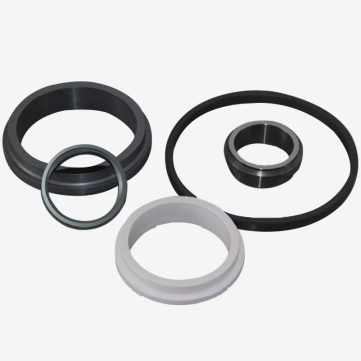
Introduction to Dry Running Gas Seals
Unveiling the Non-Contacting Wonder:
Dry running gas seals represent a paradigm shift in mechanical pump
seals technology. These seals operate without physical contact, eliminating friction and wear concerns commonly associated with traditional seals. Junty’s dry running gas seals, characterized by their non-contacting nature, stand out as a reliable solution for high-speed mechanical applications.
Versatility in High-Speed Environments:
One of the key attributes of dry running gas seals is their adaptability to high-speed environments. As a non-contacting face seal, they excel in applications where traditional seals might face challenges. Junty’s expertise lies in understanding the nuances of these seals, providing solutions that enhance performance and reliability in diverse high-speed scenarios.
Performance and Applications
Efficiency Beyond Expectations:
Junty’s dry running gas seals bring unparalleled efficiency to high-speed mechanical systems. By eliminating physical contact, these seals minimize heat generation, reduce wear, and enhance the overall operational efficiency of the equipment. This translates to longer equipment life and reduced maintenance costs.
Applications in Natural Gas Networks:
A prime example of the impactful application of dry running gas seals is in natural gas transfer and distribution networks. Compressors play a crucial role in these networks, demanding high-speed, reliable seals. Junty’s dry gas seals have proven their mettle in such environments, providing efficiency and reliability that align with the critical nature of natural gas operations.
Conclusion
In the realm of high-speed mechanical applications, Junty’s expertise in mechanical pump seals emerges as a game-changer. Our focus on non-contacting, efficient solutions sets us apart. We not only possess a deep understanding of the technology but also tailor it to meet the specific demands of various applications. For those in search of reliability and efficiency in high-speed scenarios, Junty’s mechanical pump seals stand as a testament to our unwavering dedication to excellence. Contact Junty today to experience the transformative impact of our cutting-edge mechanical seal solutions, designed to meet the challenges of the future.
Share This Post With Others!
Related Posts
 Enhance Water Pump Performance with Versatile Mechanical Seal Rings from JuntyAugust 30, 2024
 Trust Junty for All of Your Thrust Disc and Thrust Washer NeedsAugust 29, 2024
 Your Trusted Source for High-Quality Mechanical Seal PartsAugust 28, 2024
 Carbon Graphite Solutions Boasting Resin Bonding, Resin Impregnating, and Metal ImpregnatingAugust 27, 2024