

As a trailblazer in high-performance tribomaterials, Junty unveils the unparalleled capabilities of SiC mechanical seals. This comprehensive guide delves into the various SiC grades meticulously crafted by Junty, shedding light on their distinctive properties and widespread applications across industries.
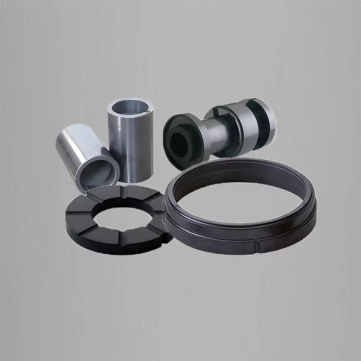
Understanding Silicon Carbide Grades
RB SiC – Cost-Effective Marvel
Junty’s range includes Reaction Bonded Silicon Carbide (RB SiC), renowned for its cost-effectiveness. Explore the fine balance of good chemical resistance and excellent wear properties, making RB SiC an economical yet efficient choice for diverse applications.
SSiC – Resisting the Hostile
Delve into Sintered Silicon Carbide (SSiC), Junty’s answer to chemically hostile fluids. Uncover how SSiC, containing no free silicon, stands as the optimal choice for high-temperature applications, showcasing Junty’s commitment to delivering solutions that defy challenging environments.
Graphite-Loaded SiC – Tribological Prowess
Discover the composite brilliance of graphite-loaded Silicon Carbide (SiC + C). Understand how the infusion of free graphite enhances the tribological performance and lubricity of both RB SiC (RB SiC + C) and SSiC (SSiC + C). Junty’s expertise shines in creating a SiC grade that excels in various applications.
Applications and Popularity of SiC Mechanical Seals
Versatile Applications Across Industries
SiC mechanical seals have found widespread applications across diverse industries, owing to their exceptional wear properties and chemical resistance. Junty’s SiC grades play a crucial role in ensuring reliable and efficient operations in challenging environments, ranging from chemical processing to water treatment. Our SiC mechanical seals are specifically engineered to withstand the harsh conditions encountered in these industries, providing superior performance and longevity. With our excellent wear resistance and chemical inertness, Junty’s SiC mechanical seals offer unparalleled reliability and reduce the risk of leaks or failures.
25 Years of Market Dominance
For over 25 years, Junty has marketed Silicon Carbide as a high-performance tribomaterial, solidifying its reputation as a market leader. Explore the enduring popularity of SiC mechanical seals, showcasing Junty’s unwavering commitment to providing cutting-edge solutions that withstand the test of time.
Conclusion
In the realm of SiC mechanical seals, Junty stands as a beacon of innovation and reliability. By decoding the nuances of SiC grades, from cost-effective RB SiC to chemically resistant SSiC and tribologically enhanced graphite-loaded SiC, Junty showcases its prowess in delivering tailored solutions. As industries evolve, Junty’s SiC mechanical seals remain indispensable, ensuring longevity and efficiency in diverse applications. For those seeking a partner in excellence, Junty’s Silicon Carbide mechanical seals redefine the standards of performance and durability. Contact Junty today to experience the transformative impact of SiC technology tailored to your specific needs.
Share This Post With Others!
Related Posts
 Enhance Water Pump Performance with Versatile Mechanical Seal Rings from JuntyAugust 30, 2024
 Trust Junty for All of Your Thrust Disc and Thrust Washer NeedsAugust 29, 2024
 Your Trusted Source for High-Quality Mechanical Seal PartsAugust 28, 2024
 Carbon Graphite Solutions Boasting Resin Bonding, Resin Impregnating, and Metal ImpregnatingAugust 27, 2024