

Rubber O-rings are essentially mechanical gaskets used to seal the grooves that are present due to surfaces interfaced together. Correspondingly, they are special rubber sealants to prevent fluid flow and prevent unprecedented leakages. More specifically, they fill in any clearances that might provide a passage for the fluids to flow when the part is under stress.
When different surfaces are subjected to compressive stresses, these o-ring rubber sealants offer damping by absorbing the excessive stresses. Subsequently, as the pressure is relieved, the rubbers retain their original form by retracing their memory. But the rubber O rings in the market wear different colors. What are the differences? How to choose the right one for my business? You can find the answer in this article.
Basic Information About Rubber O rings
1. How O-rings are made
Rubber o-rings are synthetic seals made from an array of different materials. Some of the most frequently used materials by o ring manufacturers include:
- Nitrile
- EPDM
- HNBR/NBR
- VITON
- Silicone
- Alfas
- Neoprene
An assortment of techniques is involved, with extrusion and molding as the most prominent manufacturing processes. Injection molding, compression molding, transfer molding, and extrusion are the most common processes involved in o ring manufacturing.
Although historically, o rings have always been made in the o shape due to the limited applications. However, modern applications require sealants in all sorts of shapes, sizes, and materials. A lot of industrial applications use rods and shafts that have multiple shapes and require all kinds of rubber seals.
2. Common applications of Rubber O rings
Mechanical gaskets, generally speaking, are employed to prevent fluids like air and fuel from leaking through grooves and depressions. Among the applications that utilize O rings are air conditioning, industrial high-pressure vessels, Engine Seals, Plumbing seals, Aerospace applications, and many more.
O ring color classification is important in determining what ring can work for a specific purpose and under what environmental conditions. Consequently, only after knowing the details of color classification can you opt for an o ring for your particular application.
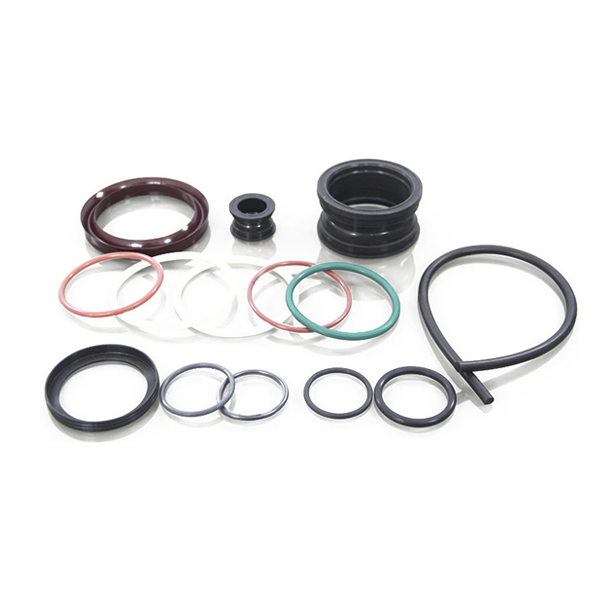
3. The differences in the O-ring with different colors
Color coding and the assortment is the only classifications when it comes to o ring sealants. Different rubber o rings behave in different way when they come in contact with certain fluids under varying pressure and temperature conditions.
- Black O rings
It is one of the most frequently used among the various options. They are available in multiple compositions, including Nitrile, Viton, Aflas, EPDM, Neoprene, HSN, and FKM.
Black o rings come in a variety of distinct compositions. These rings are very suitable for extreme temperature conditions. Black o ring sealants are well suited for applications involving water and can bear a temperature range of -10 to +110 degrees. They provide great resistance to overheating and hence offer fire prevention.
- Yellow O rings
Usually manufactured using HNBR, they offer limited use in applications involving gas and water only. While the maximum retainable temperature range for these rings is not as much as the black o rings, they can work extremely well at low temperatures. Yellow rings offer sealant applications with a temperature range of -20 to +70 degrees.
- Green O rings
Perfect for extreme pressure and temperature conditions, these o rings are manufactured from the fluoroelastomer material, FKM. They can retain their shapes even after acute deformation at high fluctuating stress conditions.
Conclusion
Now you may have proper knowledge about rubber O rings. Now time to answer the question of who to turn to for quality O rings. We at Junty provide the most reliable mechanical gaskets and O-ring sealants for your various industrial applications and machine parts. Junty has been a trusted supplier of the best quality Rubber O rings available in the market, with customer satisfaction on our bucket list.

So, contact us if you have any questions over the O rings.
¡Comparta esta publicación!
Publicaciones relacionadas
 4 consejos para prevenir fallos e instalar correctamente la empaquetadura mecánica en bombas de agua12 de abril de 2024
 ¿Cuál es la función del cojinete de arandela de empuje para bombas sumergibles eléctricas?22 de marzo de 2024
 ¿Qué es un manguito de eje? Introducción a los materiales y guía de reemplazo2 de febrero de 2024